I’m overwhelmed by all the universal TV remote options and can’t tell which ones actually work well with older TVs, soundbars, and streaming boxes together. My current remotes are dying or missing, and I’m tired of juggling three different controllers just to watch a movie. Can anyone recommend a reliable, easy-to-program universal TV remote that really works across brands and won’t be a headache to set up?
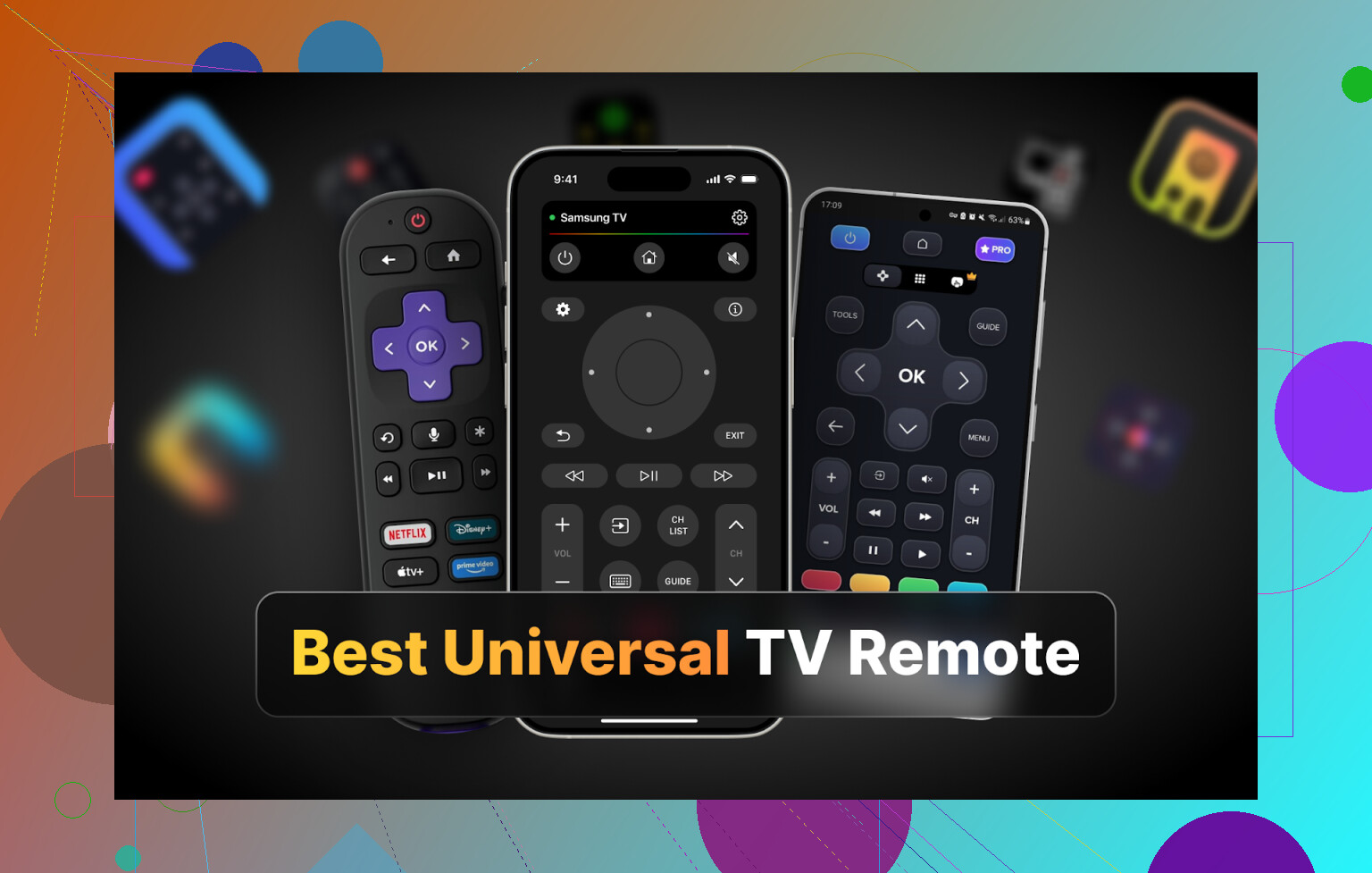
Hi everyone
I hit the point where I was done hunting for TV remotes under the couch. We have two TVs at home, Samsung and LG, so two different remotes, and somehow both of them keep disappearing at the exact moment I want to watch something.
My phone is always on me, so I went down the rabbit hole of “universal TV remote” apps. The idea was simple: install an app, connect it to the TV over Wi‑Fi, and stop caring where the plastic remote ended up.
I tested a bunch of these on iPhone, Android, and Mac. Some were decent, some felt like ad farms with a remote bolted on. Here is how it went for me.
PART 1: iPhone TV REMOTE APPS
On iOS I tried four apps from the App Store:
TVRem Universal TV Remote
TV Remote – Universal Control
Universal Remote TV Smart
TV Remote – Universal
Each one behaves a bit differently once you try to live with it for more than 5 minutes.
TVRem Universal TV Remote – my main pick on iPhone
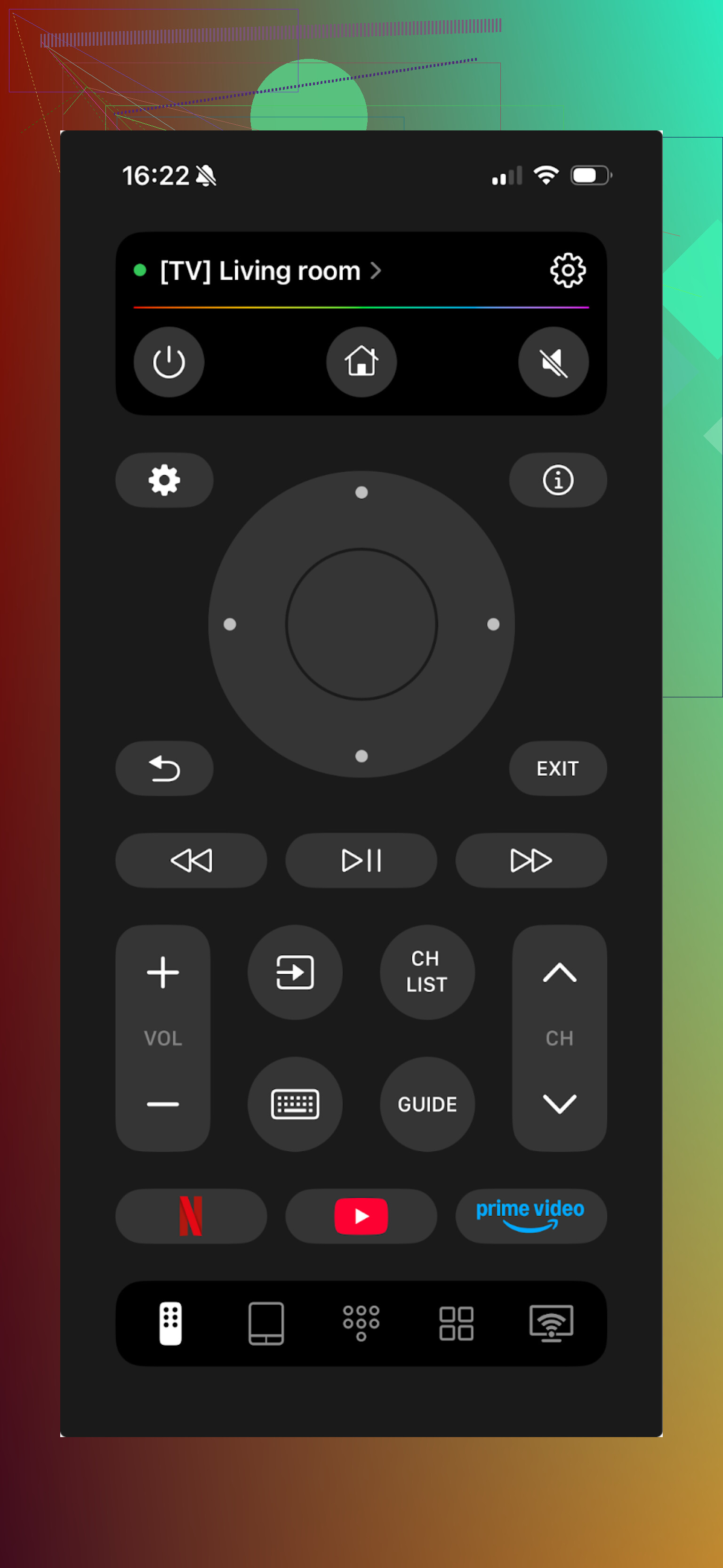
I started with this one and honestly expected it to nag me for money after a few taps. It did not.
It worked with my Samsung and LG, and the supported list in the app includes LG, Samsung, Sony, Android TV, Roku, and a bunch of others. I never hit a brand wall except for Vizio.
What I used most:
• Touchpad-style navigation instead of those old-school arrows.
• Voice control hooks into Google Assistant or Alexa on supported TVs.
• Full keyboard for typing search queries and passwords.
• Basic stuff like changing channels, volume, app switching.
No prompts to start a trial, no fake “free” mode that only lets you use power and volume.
Pros
- Interface is simple enough that I did not need to think about it.
- TV detection and pairing worked on the first try both times.
- No paid tiers, no “pro” version.
- Worked with every non‑Vizio TV I tried.
- It covered everything my physical remotes did for daily use.
Cons
- No Vizio support at the time I tried it.
Price
Free
Link
Verdict
If you want something on iPhone that behaves like a normal remote without trying to sell you subscriptions, this is the one I’d start with.
There is also a pretty detailed Reddit thread comparing universal remote apps vs real remotes here:
https://www.reddit.com/r/DataRecoveryHelp/comments/1qqa2bh/best_universal_tv_remote/
TVRem product page: Free TV Remote App for iPhone & iPad: One Remote for Almost All TVs
TV Remote – Universal Control
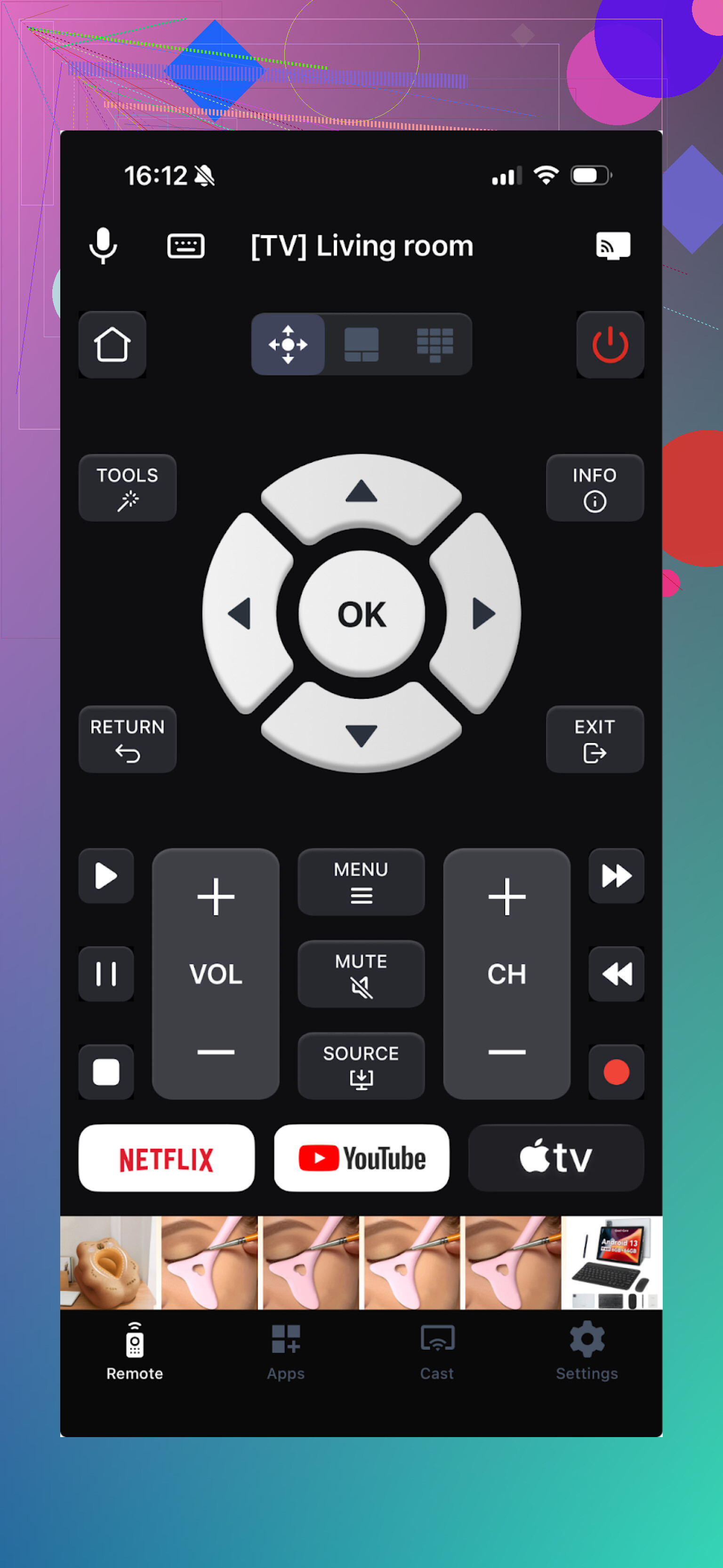
This one looks fine on the surface. It supports many brands and uses Wi‑Fi, so as long as your phone and TV are on the same network, it works.
Features that were useful for me:
• Touchpad
• Voice control
• App and channel launcher
• Keyboard
The catch is: nearly everything interesting sits behind a paywall. I had to start a free trial to see what it actually does. There is also media casting support, which some people will like, but for my use it was extra fluff.
Pros
- It has almost every feature I wanted.
- Works with a lot of TV brands and platforms.
Cons
- Ads inside the app.
- Basic things feel locked behind paid tiers.
- The app crashed a few times when I opened the menu.
Price
From 4.99 and up
Link
Verdict
It works, and if you pay you get a capable remote. I did not buy it because every second tap tried to push me into some offer. If you are touchy about upsells, it will annoy you fast.
Universal Remote TV Smart
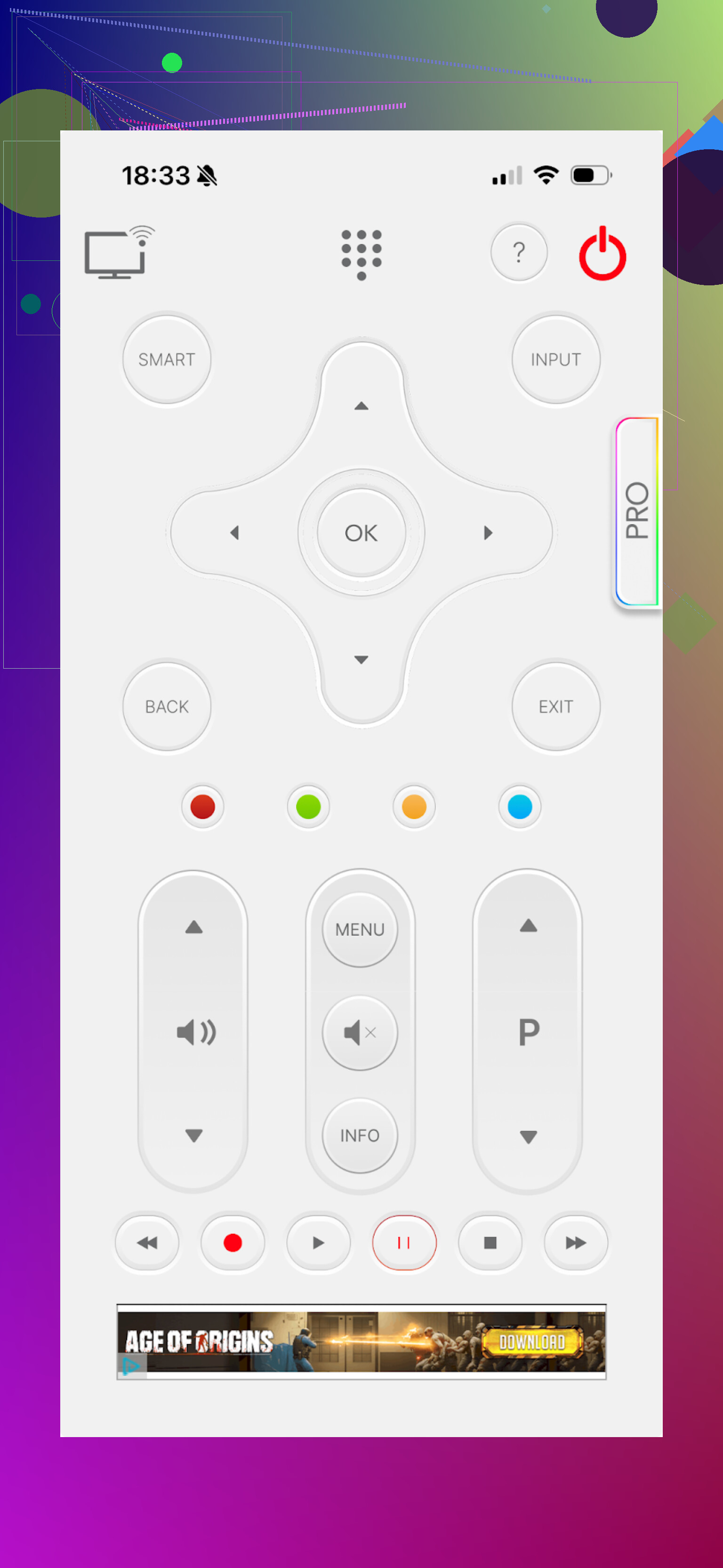
This one felt like someone skinned a remote without thinking how hands use it.
The layout is cramped and awkward, I kept hitting the wrong thing, and it never felt like a physical remote replacement. It does have the usual pieces: keyboard, navigation, volume, channels.
Pros
- Works with many brands.
Cons
- Interface feels clumsy and inefficient.
- No voice controls.
- Video ads that interrupt what you are doing.
- Lots of features trigger paywalls. Even trying to open YouTube led to an offer popup.
Price
From 7.99 and up
Link
Verdict
Out of all the iPhone remotes I tried, this one was at the bottom. You pay, you watch ads, and in return you get a layout that fights you.
TV Remote – Universal
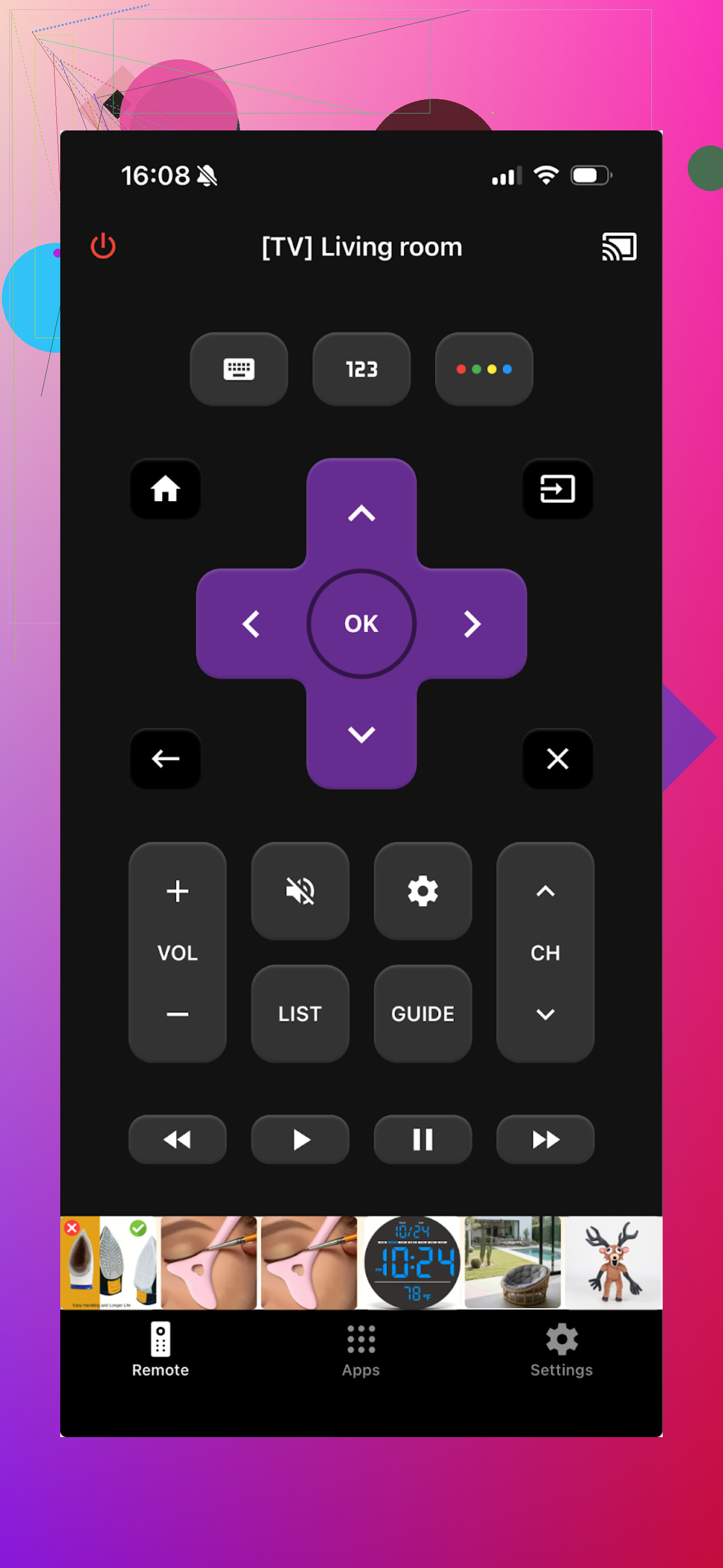
This app turns your iPhone or iPad into a remote and supports LG, Samsung, Sony, Vizio, Android TV, and others.
It connects over Wi‑Fi, so both devices need to be on the same network. Once paired, it covers the basics:
• Switching apps and channels
• Keyboard input
• Playback controls like pause and rewind
Pros
- TV detection was straightforward.
- Clean interface.
- All the basic remote tasks are covered.
- There is a free trial to test the full set.
Cons
- Ads in the free mode, removed only if you pay.
- Almost every “advanced” control leads to an upsell screen.
Price
From 4.99 and up
Link
Verdict
I used the trial to go through everything. The main screen stuttered a bit on my phone, but the controls worked. The thing that pushed me away was the constant sense that every feature was monetized separately. The ads did not help either.
PART 2: ANDROID TV REMOTE APPS
My wife is on Android, so I tested and watched her test several options there.
Universal TV Remote Control
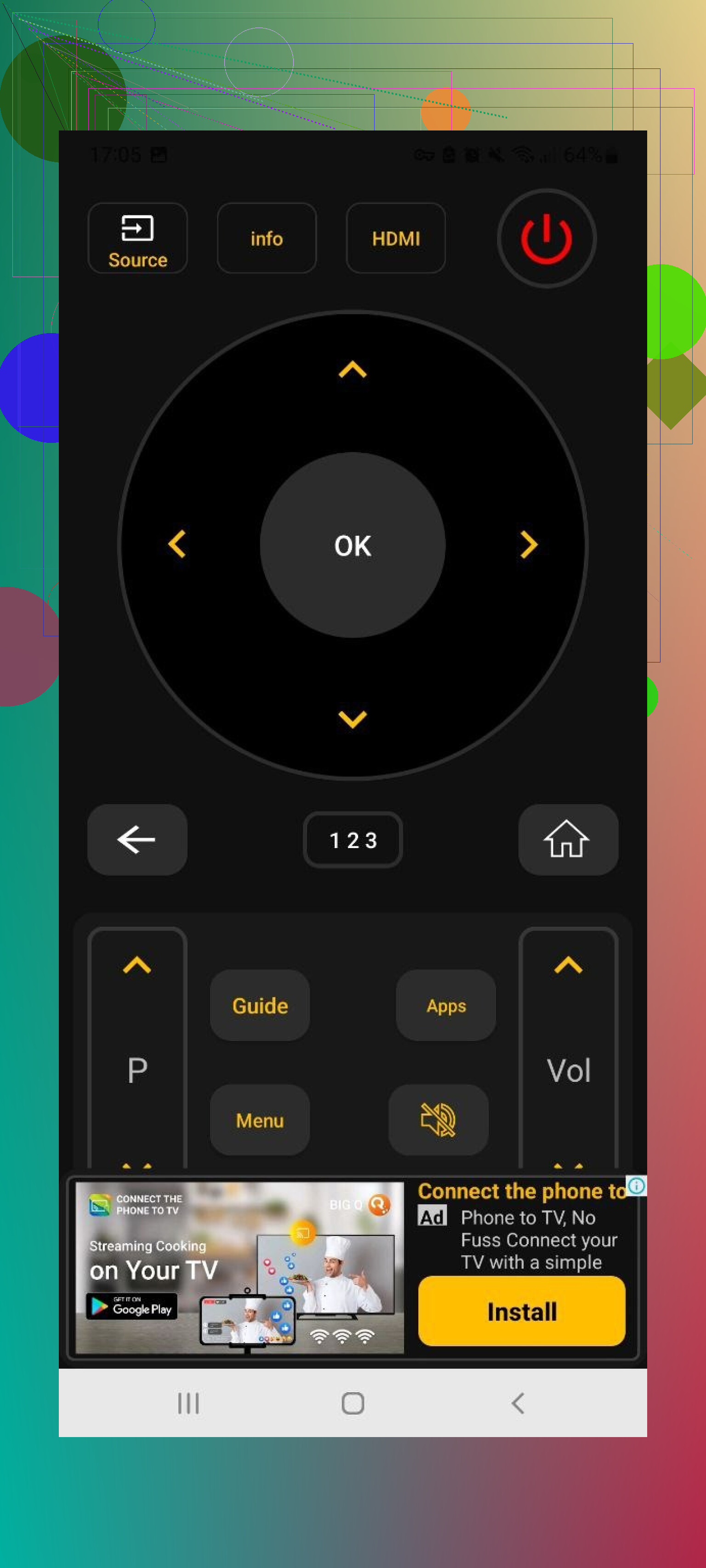
This one turns an Android phone into a universal remote for brands like Sony, Samsung, LG, Philips, TCL, Hisense, Panasonic, and more.
What stood out is that it works both over Wi‑Fi and as a traditional IR remote if your phone has an IR blaster.
Features I used:
• Trackpad navigation
• Voice search
• App control
• Keyboard
Everything important was free. Then the ads hit.
Pros
- Supports many TV models.
- Works via Wi‑Fi and IR.
- Essential features do not require payment.
Cons
- The ad load was excessive. Some full-screen ads were hard to close.
- The app crashed often enough that I had to reconnect to the TV multiple times.
Price
Free
Link
Verdict
On paper this looks ideal: lots of features, no payment requirement for basics. In practice, the ad spam killed it for me. My wife still uses it, she has more patience for ads than I do.
Remote Control For All TV | AI
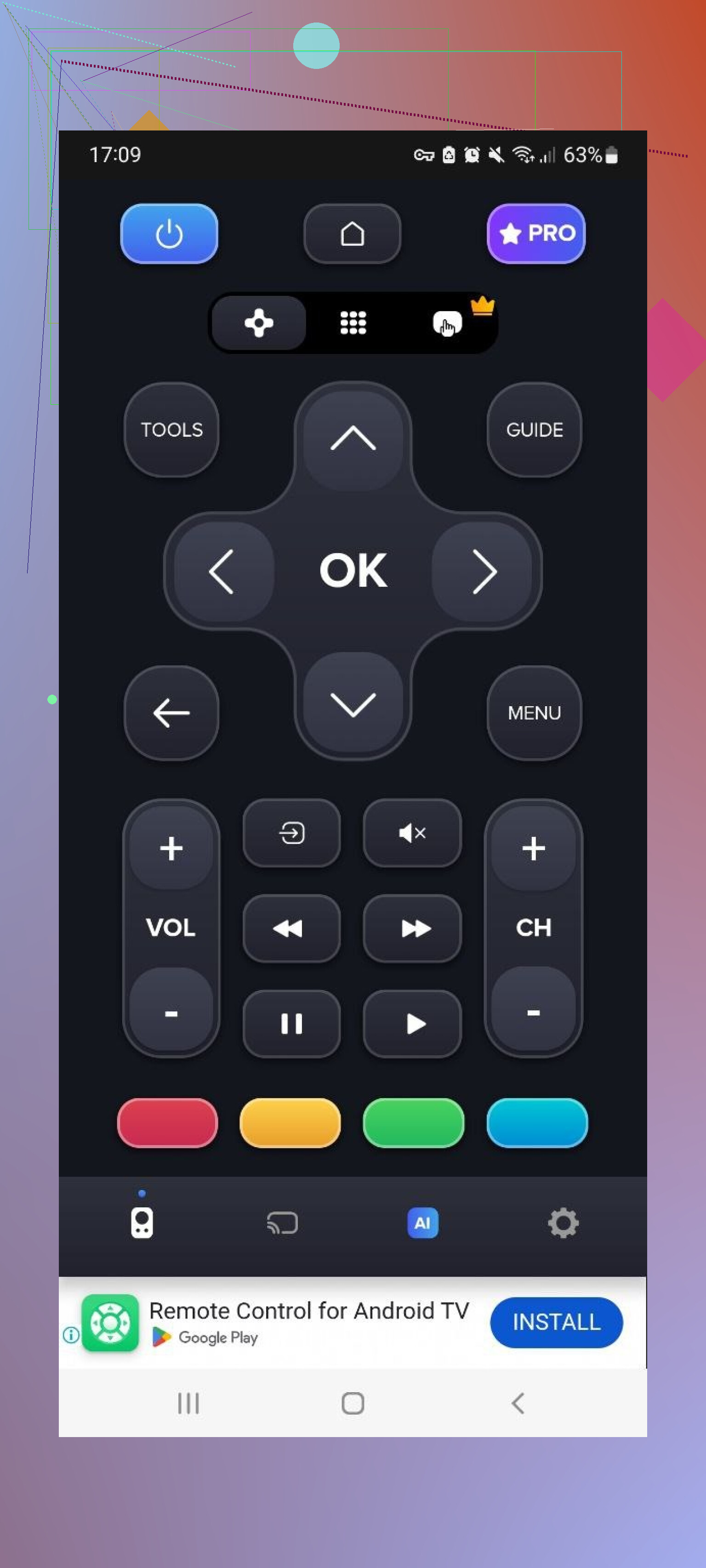
This one is another universal Wi‑Fi remote for multiple TV brands.
The free mode gives you a basic remote. Enough for power, volume, simple navigation. The downside: many ads, and the TV discovery process took its time every single time.
Extra features behind the paid plan:
• Ad removal
• AI assistant
• Keyboard with voice input
• Screen mirroring
Pros
- Works with a wide range of TVs.
- Basic controls work in free mode.
Cons
- A lot of ads while testing the free version.
- Slow TV detection and connection.
- Anything beyond basics is locked to the paid tier.
Price
From 4.99 and up
Link
Verdict
This one is ok if you accept ads and only need power, volume, arrows, and maybe input switching. For quick “turn on and change channel” usage it works, but as a daily remote I found the slow connection annoying.
Universal TV Remote Control (Unimote)
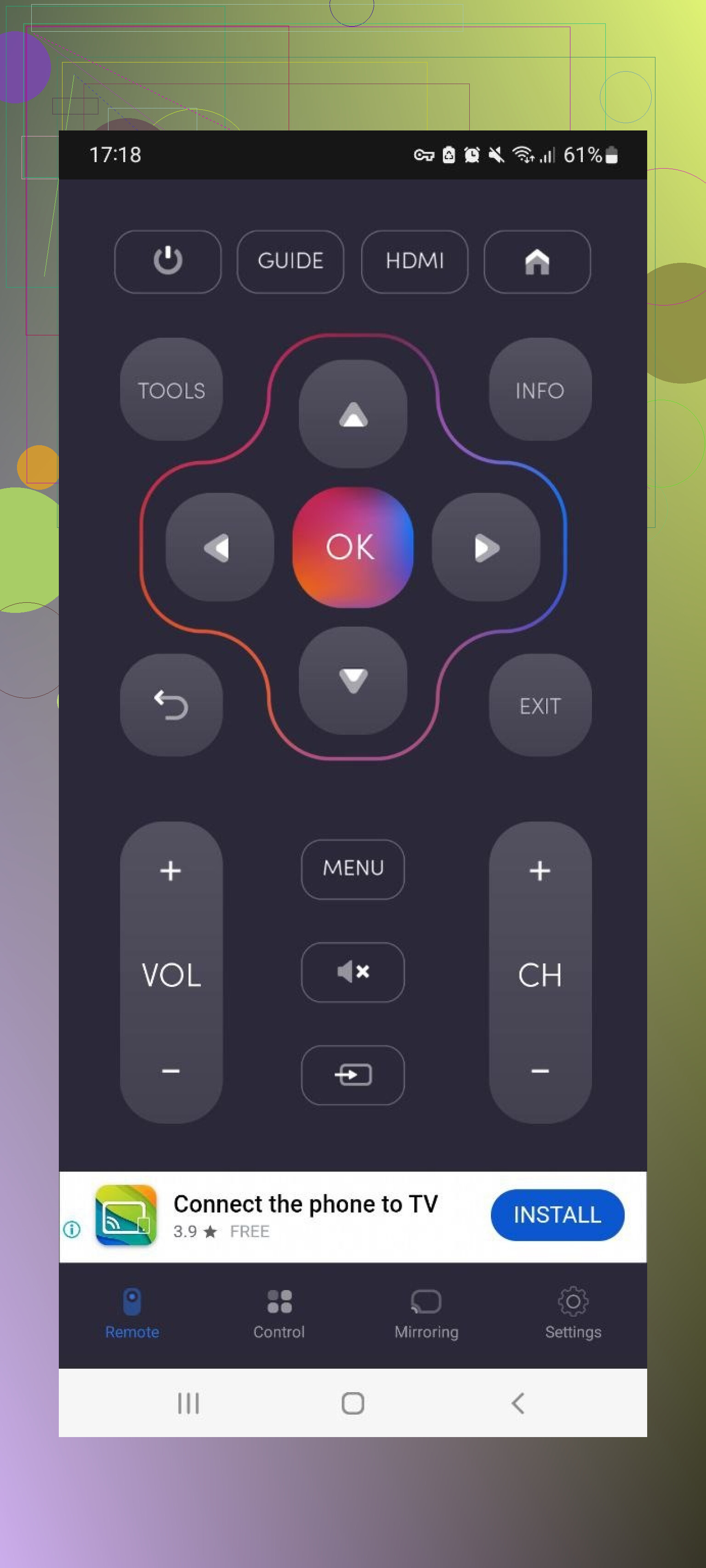
This app supports both Wi‑Fi and IR and covers smart TVs plus older IR models if your phone has IR hardware.
It found my TV fast, but getting it to connect took a few attempts. Once in, it felt ok until the ads started rolling again.
Pros
- Simple layout, easy to understand fast.
- Works with IR and Wi‑Fi, good if you have different TV types.
Cons
- Full-screen video ads all over the place.
- Many things sit behind in-app purchases.
- The connection dropped from time to time.
Price
From 5.99 and up
Link
Verdict
I would keep it installed as a “my real remote died” backup. It does connect, it does control. For everyday usage, the unstable connection and aggressive ads made it more hassle than I wanted.
Universal TV Remote Control (another one, different dev)
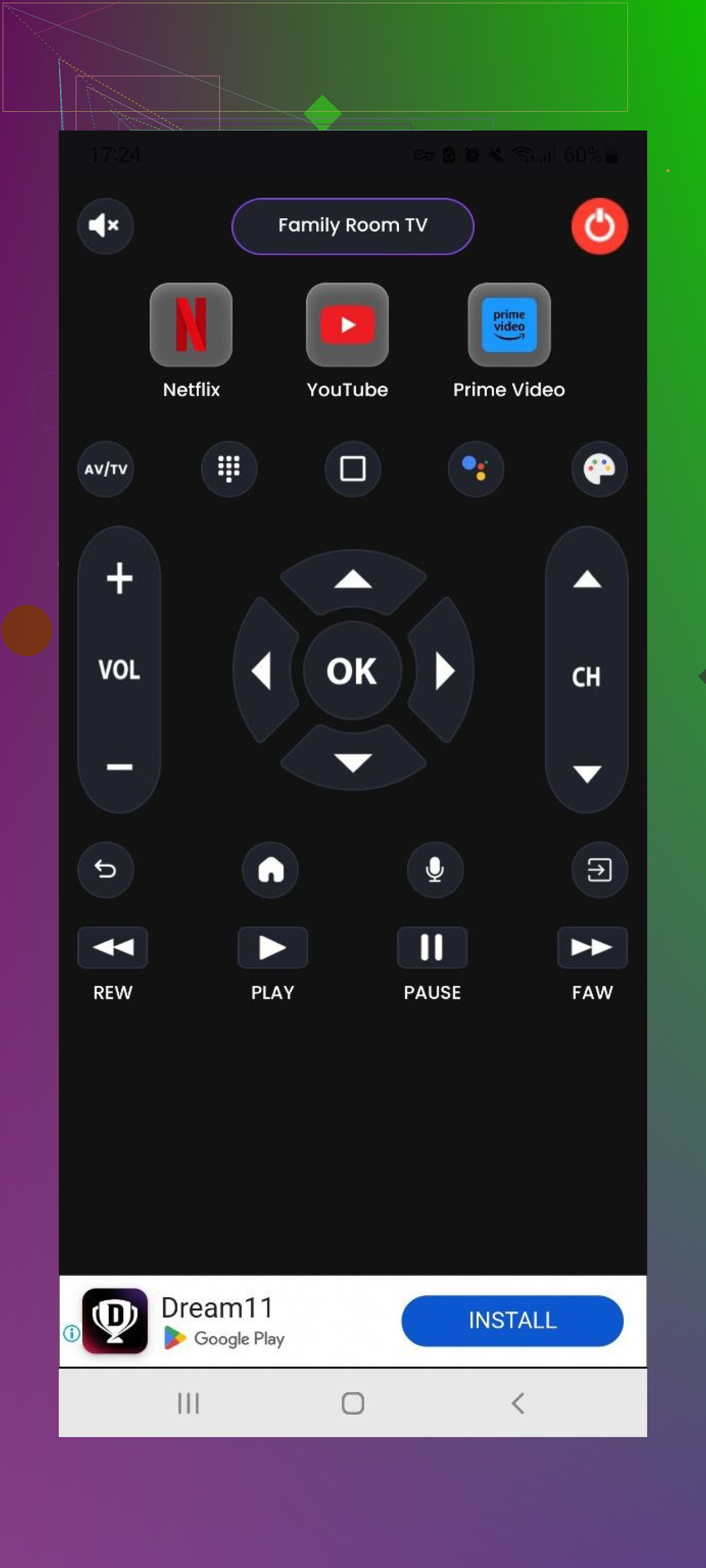
This last Android app in my list also claims “universal” and focuses on brands like LG, Samsung, Sony, TCL, and others. It works both on Wi‑Fi and with IR.
The core feature set:
• Main control screen
• Power toggles
• Home and Menu navigation
• Basic playback control: Play, Stop, Back, Forward
Pros
- All standard remote tasks are covered.
- There is a free trial for the paid tier.
Cons
- Frequent ads.
- Most of what you might want long term is paywalled.
Price
From 3.99 and up
Link
Verdict
It does the job. But almost anything beyond the bare minimum asks for payment, and the ad load is intense. If ads bother you, this one will too.
PART 3: MAC APPS TO CONTROL YOUR TV
I also wanted to sit at my Mac and not reach for anything else while watching something on the TV, so I tried a couple of Mac-based remote apps.
TVRem Universal TV Remote (Mac)
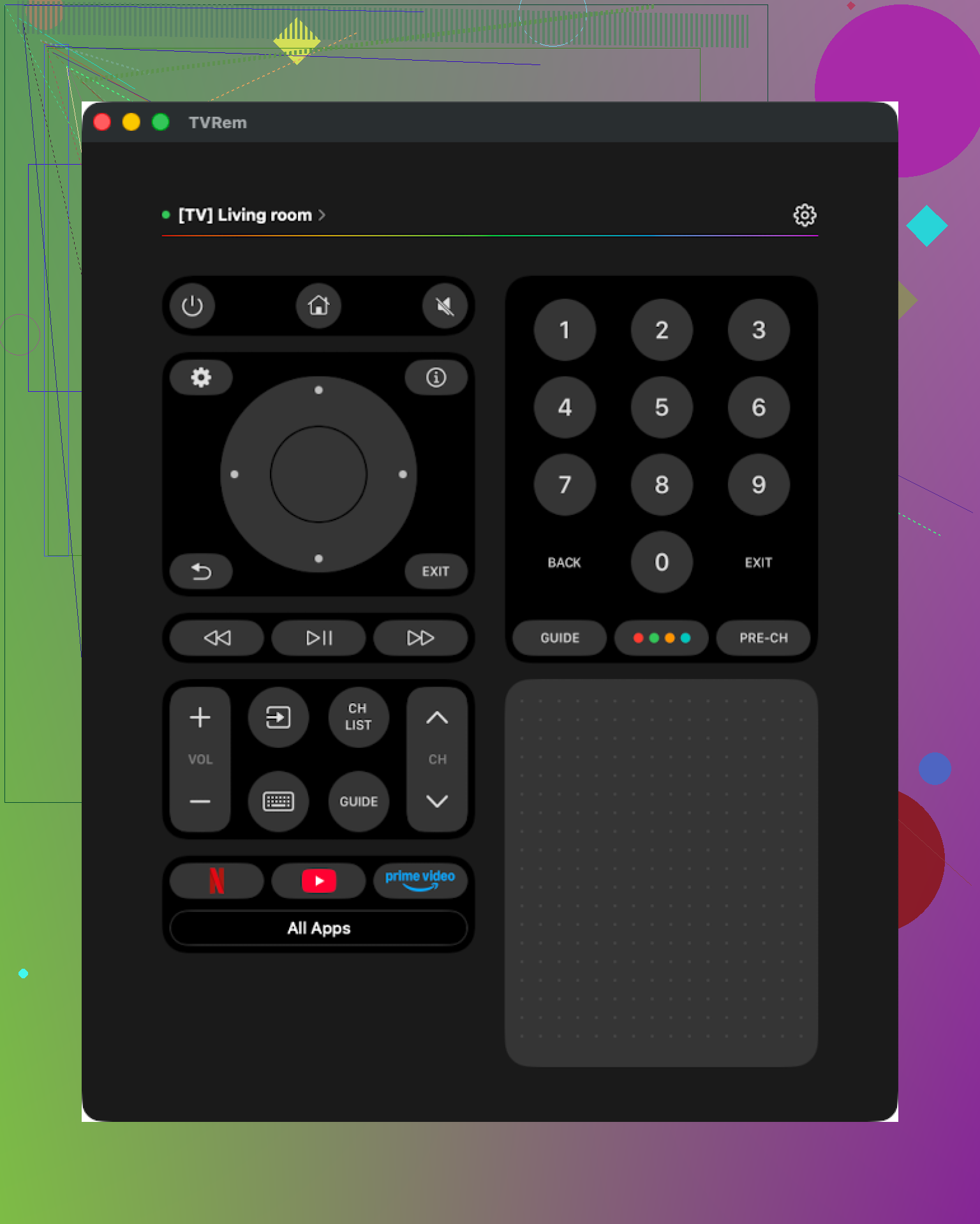
Same name as the iPhone one, and the behavior is similar in a good way.
I grabbed it from the Mac App Store, linked it to a Samsung TV in my living room, and it paired fast. The UI is clean, with no extra fluff stacked around.
Features I used most:
• Touchpad from the Mac trackpad or mouse
• Keyboard input for search boxes on the TV
• App launcher panel
Pros
- Straightforward interface that did not need any manual reading.
- No ads, no locked features, no awkward “upgrade” prompts.
- Worked with my Samsung and most popular brand names listed inside.
- Covered everything I needed from a TV remote on a Mac.
Cons
- No support for Vizio at the time I tried it.
Price
Free
Link
Verdict
If you watch content from your Mac and your TV is on the other side of the room, this solves that problem without any cost. For my setup it became the default.
TV Remote, Universal Remote (Mac)
This one is also on the Mac App Store and supports a lot of TV brands.
The main issue I had was stability and pricing. It connected easily, but a couple of times it crashed mid-use. Also, many of the nicer options are locked behind payment.
Pros
- Interface is fairly decent.
- Supports many popular TV brands, with basic controls available.
Cons
- Many functions ask you to pay.
- I ran into crashes often enough to notice.
Price
From 4.99 and up
Link
Verdict
It works if you are willing to spend some money and have slightly more patience with occasional bugs. For me, since the free alternative existed, I did not stick with it.
PART 4: PHYSICAL TV REMOTE VS PHONE / MAC APP
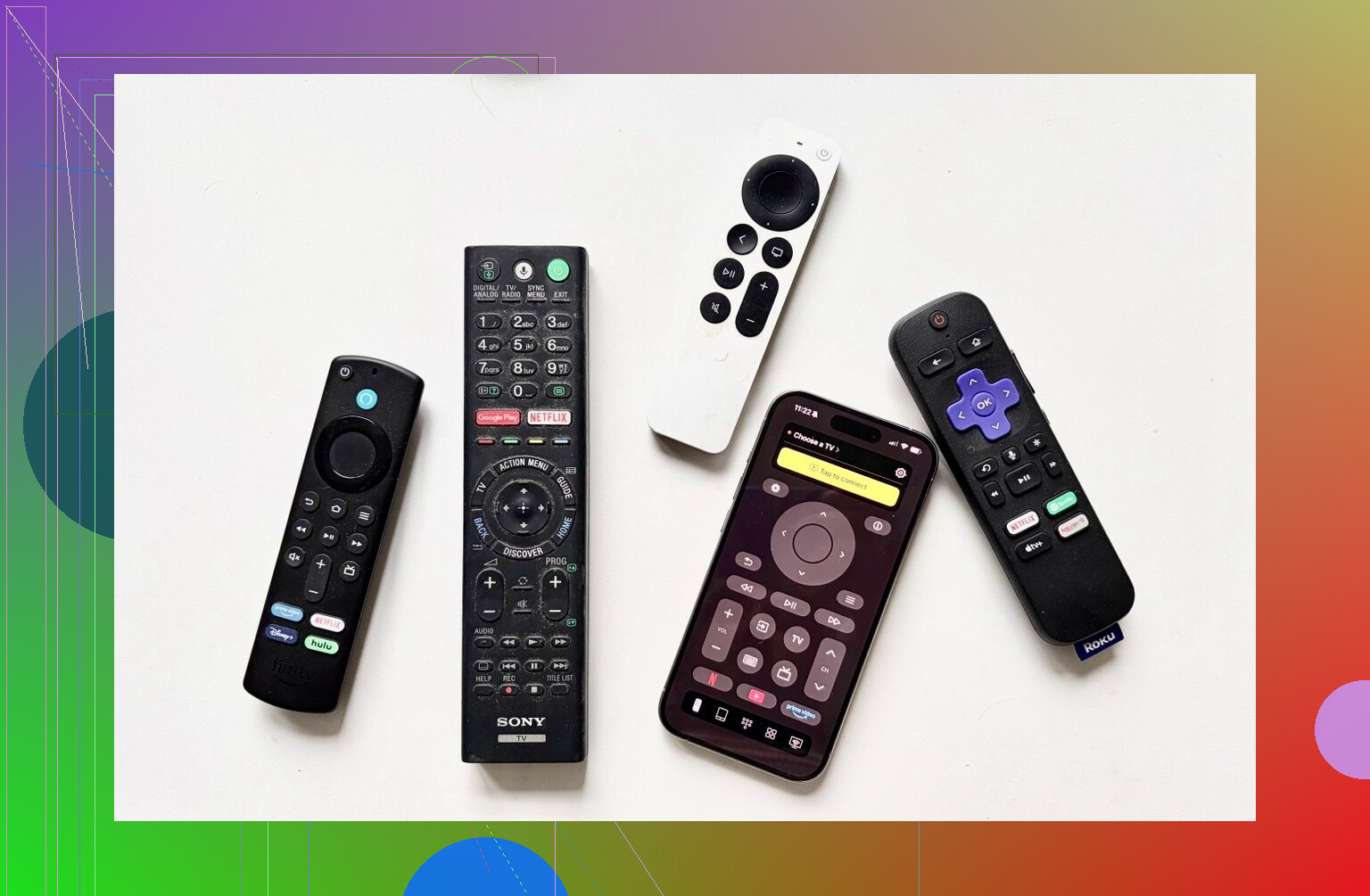
To keep it simple:
Physical remote
The original hardware that came with your TV, or a replacement you buy separately.
Remote app
Software on your phone or computer that sends commands over Wi‑Fi or IR to your TV.
Why I ended up preferring apps in most cases
-
Harder to misplace
I almost never lose my phone. Our remotes vanish multiple times per week. An app on my phone means less searching. -
Typing is less painful
Entering a Wi‑Fi password or searching “The Lord of the Rings” with arrow keys is slow. On a phone or Mac you get a proper keyboard. Apps often add a touchpad style navigation that feels closer to a laptop trackpad. -
Cost difference
Replacement Samsung remotes for models from about 2019 to 2025 run around 15 to 20 dollars on Amazon. LG replacement remotes are roughly 13 to 35 dollars depending on the model and whether you want the “Magic” style remote. A lot of apps are free or cheaper than buying even a single physical remote. -
One thing to rule multiple screens
Most remote apps let you switch between TVs or other smart devices in the same app. If you have one TV in the living room and another in the bedroom, you do not need two remotes sitting around. -
Software interfaces tend to be cleaner
Phone and desktop UIs are easier to design nicely than cheap plastic remotes with dozens of tiny buttons. Many apps use bigger buttons, clear labels, and simple layouts.
Where remote apps fall short
• You need Wi‑Fi or Bluetooth in many cases. If the TV is offline or stuck on some weird input, the app might not see it.
• You depend on your phone or Mac battery and need to unlock it every time.
• Some TVs expose only basic controls to apps. Volume and power might work, but advanced settings might still need the original remote.
MY TAKEAWAYS AFTER LIVING WITH THESE
After going through this mix of ad-heavy Android apps, a few better iPhone ones, and two Mac apps, I ended up in a mixed setup.
On iPhone
My main choice is TVRem Universal TV Remote:
Why I stuck with it:
• Free.
• No ads that I saw.
• Has touchpad and keyboard, which cover 90 percent of what I do on a smart TV.
• Setup was painless.
The only real drawback for me is no Vizio support. If you live in a Vizio household, this will be a blocker.
The paid TV Remote – Universal also did a decent job. After using the trial, I could see some people paying for it, especially if they want extra features and are fine with subscriptions.
On Android
My wife landed on Universal TV Remote Control:
Feature-wise, it is good. It even supports IR. But the number of ads is high, and I personally would not use it daily. She tolerates it because it does what she needs without paying.
On Mac
For Mac control, I use the TVRem Mac app, again:
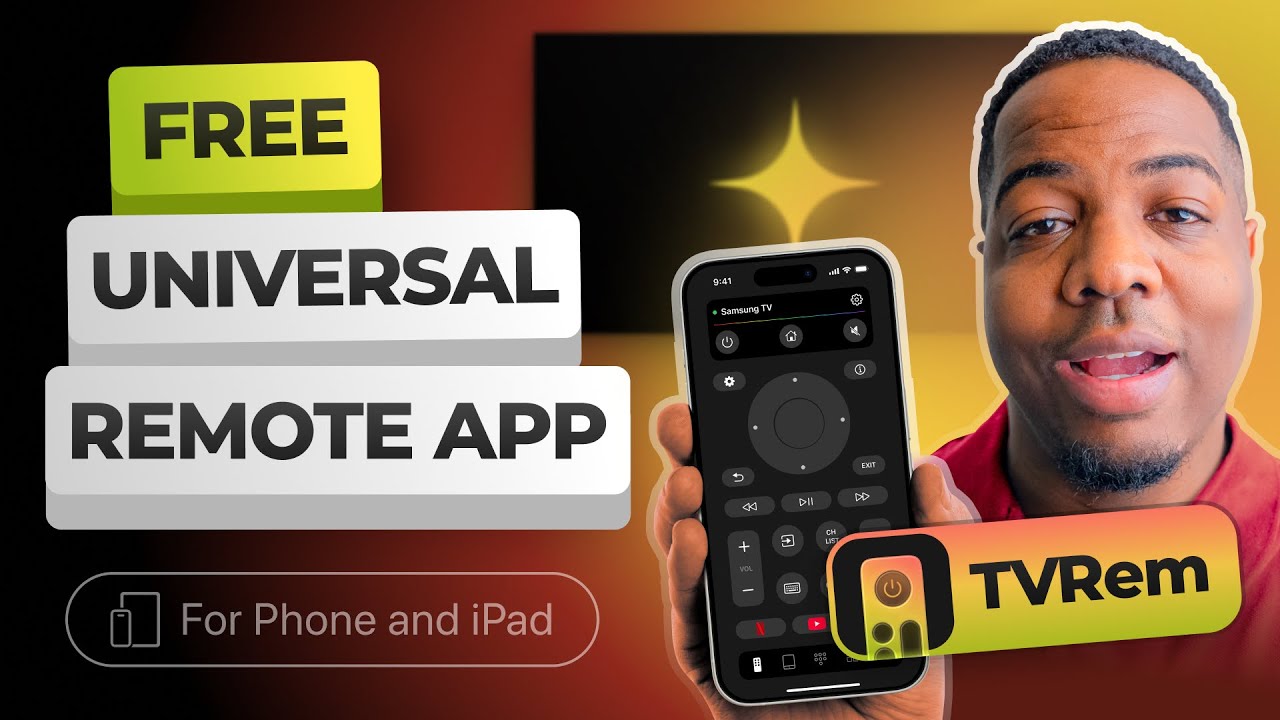
It is free, easy to use, works on our Samsung, and I have not seen ad popups yet. That is enough for me.
If you are sick of hunting for plastic remotes, grab one or two of these and see which one fits your setup and patience level for ads and paywalls. That was the biggest difference between the apps I tried: not the feature lists, but how aggressively they tried to monetize basic usage.
3 Likes
You are looking for a physical universal remote that handles older TVs, soundbars, and streaming boxes together. Different problem than what @mikeappsreviewer focused on with phone apps, so I will go the hardware route.
Short version of what tends to work in real homes, not spec sheets:
-
If you want something “set and forget”
• Sofabaton U2
• Works with IR gear like older TVs, AV receivers, most soundbars, Blu‑ray players.
• Has a big code library plus learning mode, so if a device is weird, you point the old remote at it and it learns the commands.
• Handles activities like “Watch TV” or “Watch Roku” so one button turns on TV, switches HDMI input, and sets soundbar input.
• Uses standard AA batteries.
• Weak point: uses IR only, so you need line of sight and it is slower with some menus. -
If you want something closer to the old Logitech Harmony idea
• Sofabaton X1
• IR hub for older TVs and soundbars.
• Bluetooth for streaming boxes like Fire TV, Apple TV, some Roku, PS4/5.
• Control from remote or from an app.
• Good if your gear is in a cabinet.
• Weak points: setup is more annoying, and the app UI is not great. Once you finish, you mostly stop touching it. -
For older TVs and cheap soundbars, bare minimum
• Basic GE or RCA 4‑ or 6‑device universal remotes.
• Under 20 dollars.
• Work fine with older IR only gear.
• Code lists are huge.
• Weak points: no activity macros, no Bluetooth, no support for advanced streaming box functions.
What I would do in your spot:
-
List your exact gear
• TV brand + approximate year for each.
• Soundbar brand and if it has HDMI ARC or only optical.
• Streaming boxes, for example Roku stick, Fire TV, Apple TV, etc. -
If you have mixed old TVs plus modern streaming boxes
• Pick Sofabaton X1 if budget allows. It deals with IR and Bluetooth in one setup.
• Pick Sofabaton U2 if all devices respond to IR from their stock remotes and you are ok pointing the remote at each thing. -
If you want the cheapest fix and you do not care about one button activities
• Grab a GE 4‑device universal remote, program TV, soundbar, and main streamer via codes.
• Use “audio on AUX” mode so volume buttons always control the soundbar while channel/input control the TV. -
Things to watch for so you do not get burned
• Some very old TVs share codes with newer ones, but some do not. Make sure the remote has a learning mode if your TV is over 10–12 years old.
• Fire TV sticks and some Roku sticks respond badly to generic IR only remotes. They want Bluetooth. The X1 handles that better than cheap remotes.
• If the soundbar volume is tied to the TV via HDMI ARC, you only need the TV volume on the remote. If it uses optical, you must program the soundbar as a separate device.
I slightly disagree with relying only on phone apps like @mikeappsreviewer does. Phone apps are fine as backup, but when the TV is frozen on the wrong HDMI input or Wi‑Fi is down, a physical IR remote still saves you faster.
If you post your exact TV models and soundbar brand, you can get a more precise “buy this specific one” answer instead of three options.
If your current setup is “pile of random remotes in a drawer,” you’re actually in the exact use case universal remotes were made for.
Since @mikeappsreviewer went hard on phone apps and @stellacadente already covered Sofabaton and the cheap GE/RCA stuff, I’ll fill in a slightly different lane and push you toward what actually stays working long term.
If you want one remote that handles:
• older TVs (IR only)
• soundbar or AV receiver
• streaming box (Roku / Fire TV / Apple TV, etc.)
here’s the practical breakdown.
1. Best all around for mixed old + new gear: Sofabaton X1
I slightly disagree with relying on the U2 only like some folks suggest. U2 is fine if all your stuff is IR, but once a Fire Stick or newer Roku shows up, IR-only becomes pain.
X1 is closer to the old Logitech Harmony idea:
- Hub with IR blasters for older TVs, DVD/Blu-ray, AVRs, soundbars
- Bluetooth for Fire TV, Apple TV, PS4/PS5, some Rokus
- Wi‑Fi for app control and updates
- Activities like “Watch TV” that:
- Turn on TV
- Turn on soundbar
- Select right HDMI input
- Route volume to the soundbar
Pros:
- Handles “my TV is 10+ years old, my streamer isn’t” situations pretty well
- Hub can live in a cabinet, you don’t need line of sight
- One button to go from “cable” to “Roku” instead of juggling 3 remotes
Cons:
- Setup is fiddly, the app UI is… not great
- Not cheap
- You’ll spend an evening tweaking activities and buttons
If you want to be done with this for the next 5+ years, this is the one I’d lean toward.
2. If everything you own uses IR: Sofabaton U2
Here it does line up with what @stellacadente said.
Good if you have:
- Older TV (Samsung, Sony, LG, etc.)
- Soundbar over optical or HDMI ARC
- Cable box or older Roku box that still takes IR
Why it works:
- Big device code library
- Learning mode: point the old remote at it so it learns weird buttons
- Can map volume to always control the soundbar while channel/input control the TV
- Cheaper than X1, no hub, no Bluetooth weirdness
Weak spots:
- Needs line of sight
- No Bluetooth support for Fire TV Stick or newer streaming sticks
- No super-smart activity logic, just decent macros
If your gear right now responds to “plastic remote pointed at it,” U2 is usually enough.
3. If you just want cheap and simple: GE 4 or 6 device universal
Not pretty, not “smart,” but they do work.
Use this when:
- Budget is tight
- You mostly watch from 1 input
- You just want 1 remote that:
- Turns TV on/off
- Controls volume on the soundbar
- Can send basic commands to a cable box or plain Roku
Key tips:
- Pick a model that has “audio on AUX” or “volume lock” so volume is always the soundbar
- Expect some codes not to have every single button
- No Bluetooth, no activities, no app integration
Honestly, these are great as backups even if you buy a Sofabaton.
4. Where I disagree a bit with the phone-app route
@mikappsreviewer’s app rundown is accurate, and remote apps are fine as a backup, but as your main solution:
- If Wi‑Fi drops or the TV is stuck on the wrong HDMI, half those apps cannot even see the TV
- You’re unlocking your phone every time you want volume up 2 clicks
- Ads and subscription nagging on Android are brutal
They’re nice “my physical remote wandered off” tools. I would not build my primary control system around them if you’re already frustrated.
5. What you should actually do next
If you want a dead simple decision without reading more reviews:
-
You own any Fire TV / newer Roku / Apple TV
→ Get Sofabaton X1 -
No Bluetooth-only streaming sticks, everything responds to IR
→ Get Sofabaton U2 -
Money is tight and you just want fewer remotes, not perfection
→ GE 4 or 6 device universal, set volume to soundbar, TV for power/input
If you post your exact TV brand/year plus soundbar model and which streaming box you use, someone here can tell you “X1 will work” or “U2 is fine, don’t overspend” with a lot more certainty. Right now I’d bet you’re either an X1 or U2 case, not an app-only person.
Short version: mix one solid physical universal remote with a phone / Mac remote app instead of trying to find a single “magic wand” that does literally everything perfectly.
Since @stellacadente leaned hard into Sofabaton and GE/RCA, and @reveurdenuit talked about classic Harmony-style setups, I’ll cover a slightly different angle: use a hub-style remote + apps so you are not dead in the water when the plastic remote vanishes.
1. Physical universal + app combo
For juggling older TVs, soundbars and streaming boxes together, the pattern that actually holds up is:
- One good universal remote for:
- Power sequencing
- Input switching
- Volume control
- A Wi Fi remote app on your phone / Mac for:
- Keyboard input
- Searching inside apps
- Occasional “remote is lost in the couch” emergencies
Where I differ a bit from @mikeappsreviewer: I would not depend entirely on phone apps. They are fantastic as a second layer, but if Wi Fi or HDMI-CEC misbehaves, a hardware remote that blasts IR directly at an old TV or soundbar still saves the night.
2. Using TVRem Universal TV Remote as your app layer
Since you mentioned streaming boxes and smart features, something like TVRem Universal TV Remote is a solid “software half” of this system.
Pros for TVRem Universal TV Remote
- Works across major brands like Samsung, LG, Sony and common smart TV platforms
- No subscription treadmill or “pay to unlock the volume button” behavior
- Touchpad style control feels closer to a laptop trackpad than old arrow keys
- Full keyboard support which makes password entry and search bearable
- Voice control support on TVs that already have Assistant or Alexa hooks
- Same behavior on iPhone and Mac, so you are not learning two different apps
Cons for TVRem Universal TV Remote
- No support for some brands like Vizio in certain setups
- Needs the TV on the network and in a sane state, so if the set is on the wrong HDMI input or Wi Fi is down, the app cannot see it
- For truly “dumb” very old TVs that only respond to IR, you still need a physical remote of some sort
- No deep per device macro logic like an advanced hub remote
Used alongside a physical universal, TVRem Universal TV Remote basically removes the most annoying parts of smart TV life without trying to completely replace hardware.
3. How this differs from what others suggested
- @stellacadente is right about Sofabaton being the spiritual successor to Harmony, but that alone will not fix the “typing a password with arrows” pain
- @reveurdenuit is very focused on the “activity based” experience, which is great until you need to log into a new streaming app or type a long search term
- @mikeappsreviewer dove deep into apps and is mostly correct that many are ad farms, but throws apps a bit too far into the “backup only” pile
The hybrid setup uses what each side is good at instead of forcing one tool to cover all your use cases.
4. Minimal decision guide
If you want to stop juggling remotes with the least headache:
- Buy one decent physical universal that can:
- Learn IR from your old TV and soundbar
- Control your streaming box at least for basic navigation
- Install TVRem Universal TV Remote on:
- Your main phone
- Any Mac or tablet you often use while watching
- Use the physical remote for:
- Power
- Input switching
- “Just watch something” moments
- Use the app when:
- You are typing
- You lost the plastic remote
- You want quiet late night control from a laptop
That combo usually outlives any single shiny “do it all” remote and keeps you covered whether your next upgrade is a newer soundbar, a different streaming box, or a second TV in another room.