I’m trying to use my iPhone as a remote for my Sharp Roku TV but I’m confused about which app actually works best and fully supports all the Roku TV features. Some apps connect but don’t control everything or lose connection often. Can someone recommend a reliable Sharp Roku TV remote app for iPhone and explain how to set it up so it works smoothly?
Sharp Roku TV Remote Apps for iPhone
What actually worked when I tried them
I own a Sharp Roku TV and the stock remote kept going missing, lagging, or dying at the worst times. I got tired of digging between couch cushions and decided to use my iPhone as the main remote, not a last-resort backup.
I went through a bunch of apps and kept only the ones that felt good enough for daily use. Below is what survived more than a weekend on my phone.
TVRem is the best TV remote for iPhone
If you want a Sharp Roku TV remote on iPhone and you do not want to be stuck with one TV brand, this is the one that made the most sense for me.
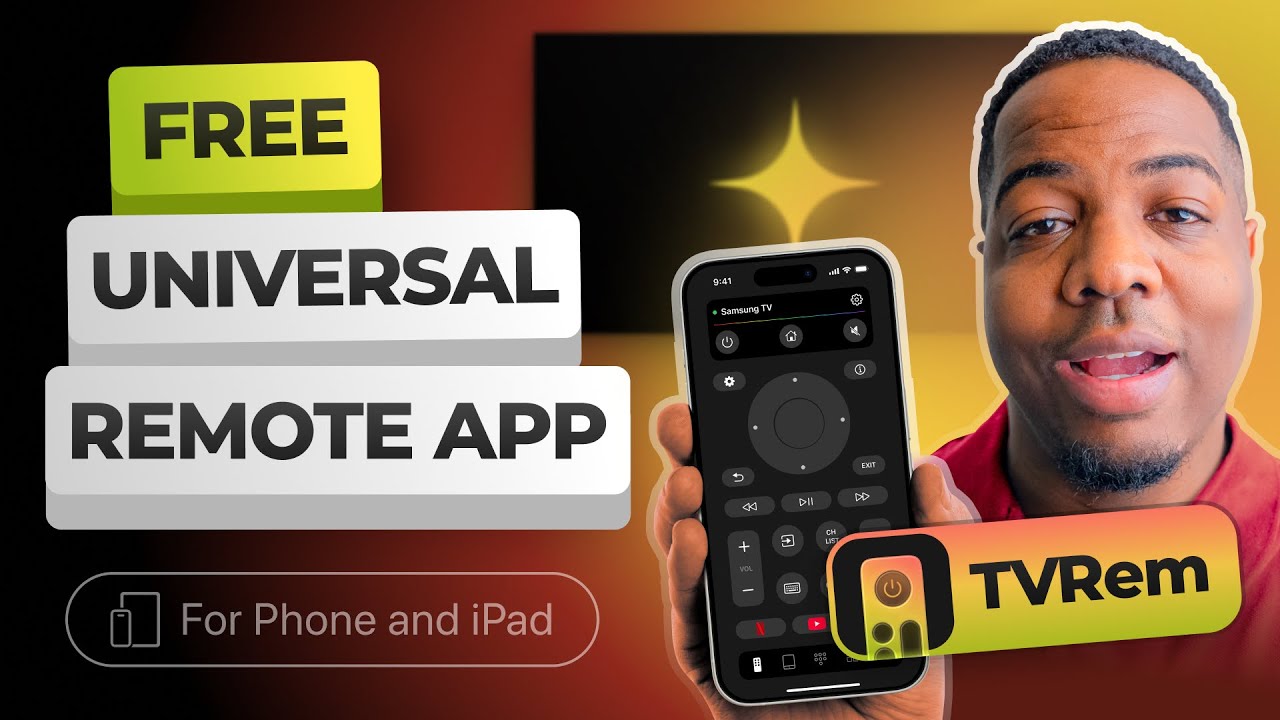
First run, it found my Sharp Roku TV over Wi‑Fi in a few seconds. No pairing codes, no weird IR dongles, no signing in. You tap your TV name, it connects, and it behaves like a regular remote.
What surprised me was that it did not care what logo was on the TV. I used it on:
• Sharp Roku TV in the living room
• An older Samsung in the bedroom
• An LG in a spare room
Same app, same layout in my hand, different TVs.
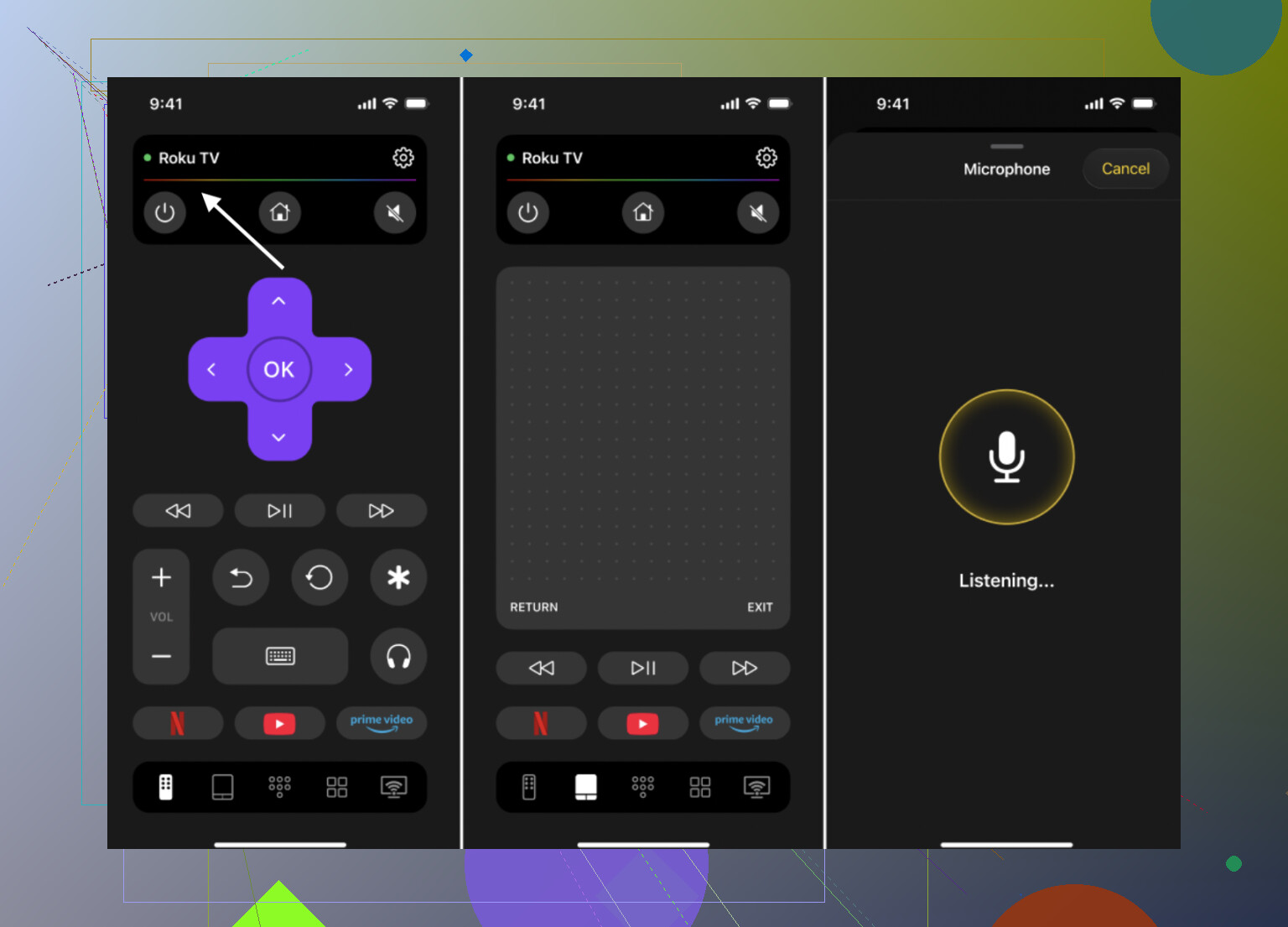
What worked well for daily use
• Works with Sharp Roku TVs and other brands, so you do not need a different app when you switch rooms or upgrade later
• Free to use out of the box
• Wi‑Fi only, no IR needed, so it works even if your iPhone does not have an IR blaster
• Full remote layout, including arrows, OK, volume, mute, power, inputs
• Built‑in keyboard, which helps a lot for searching in Roku, YouTube, Netflix login screens and Wi‑Fi passwords
• Layout is simple enough to use with one hand, which matters when you are eating or half‑asleep
What annoyed me
• Your TV and iPhone must be on the same Wi‑Fi network, or the app acts like your TV does not exist
If you want one app that replaces the Sharp Roku remote and still works if you swap TVs in the future, TVRem felt like the best long‑term choice.
Roku official app – good, but only if you stay in Roku world
The Roku app from Roku is the obvious one most people start with. I used it before I tried anything else, mostly because it felt “safe” and familiar.
It connects to Sharp Roku TVs over Wi‑Fi without much effort. If the TV is on the same network, it usually shows up right away.
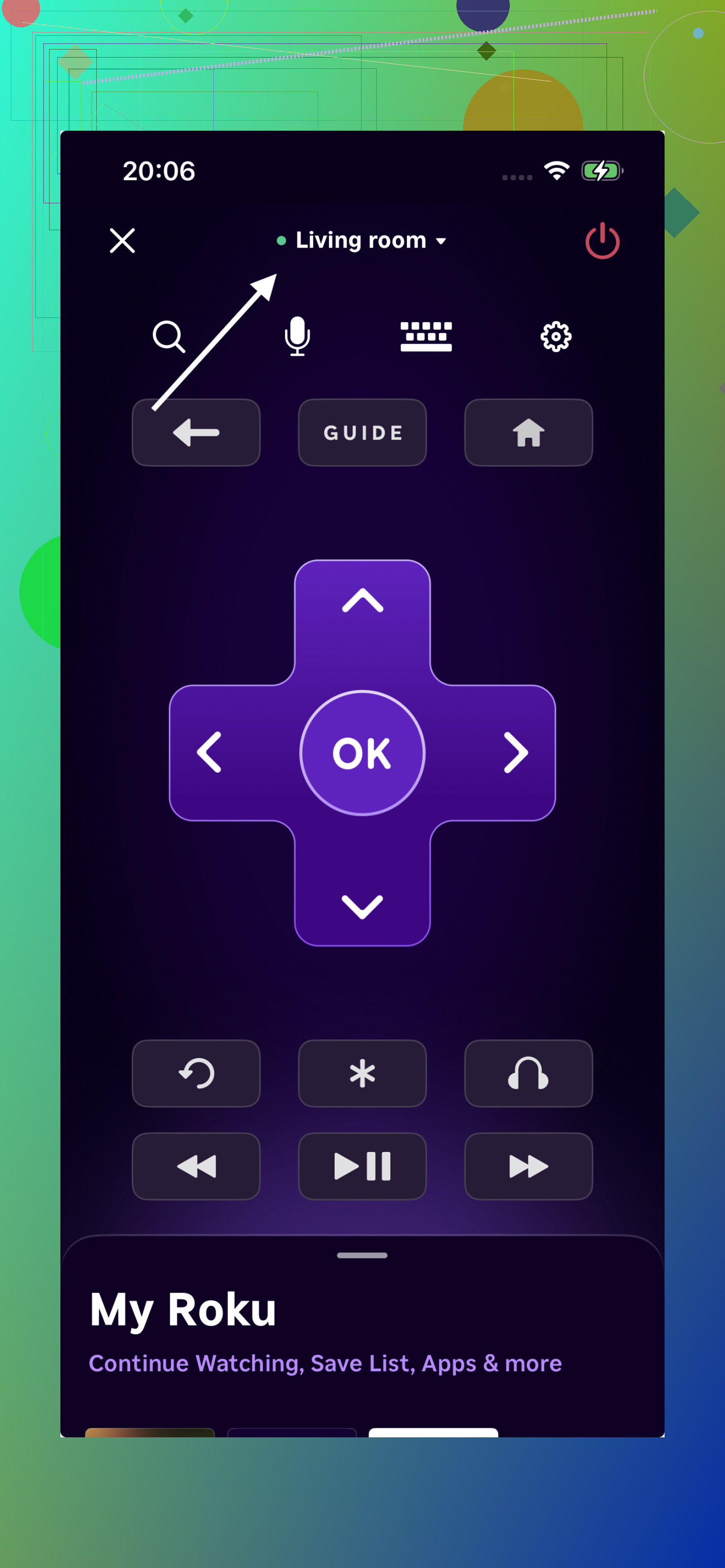
Where it does well
• Built specifically for Roku TVs and Roku sticks
• Stable Wi‑Fi connection in my tests, no random drops
• Has a keyboard for entering text
• Has voice search support, which helps if you use Roku search a lot
Where it fell short for me
• Works only with Roku devices, no luck with non‑Roku TVs in other rooms
• The app is designed around Roku content and channels, not around being a pure remote
• Extra screens and tabs you do not need if you only want fast volume, inputs and navigation
If every TV you own has Roku built in and you like Roku’s interface, the official app is fine. I dropped it because I wanted one universal remote app instead of a folder full of different ones.
TV Remote – Universal Remote – “it works” backup
This one did talk to my Sharp Roku TV and a couple of other sets, so it is not useless. It just never felt like something I wanted to rely on every day.
It did the job in a pinch, like when I tested it at a friend’s house on their TV to avoid hunting for their remote.
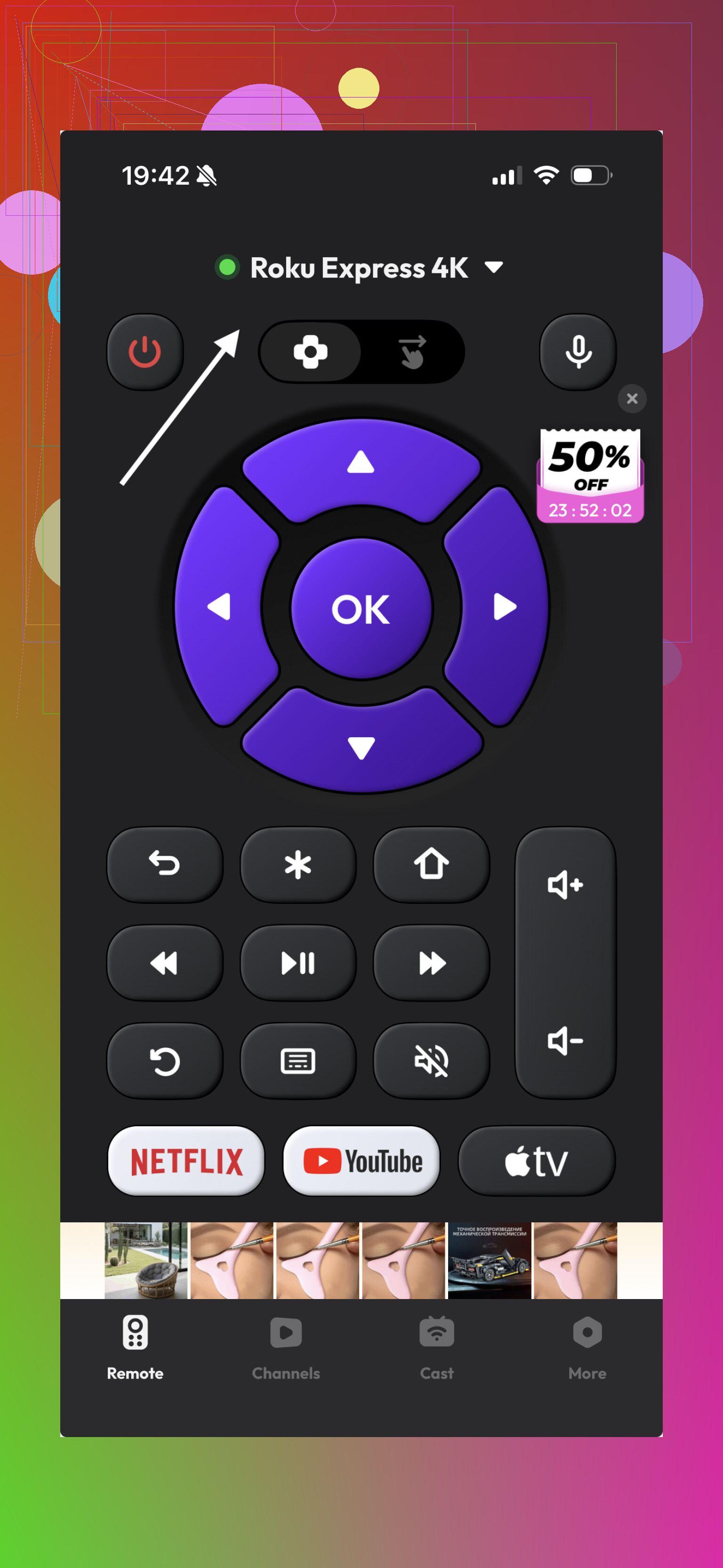
What is decent
• Supports multiple TV brands, including Roku TVs
• Basic remote stuff over Wi‑Fi works, like volume, arrows, power
• Setup is quick, you are not stuck in endless pairing steps
Where it fell behind
• Some features sit behind in‑app purchases, which gets old fast if you bounce between TVs a lot
• Interface feels generic and a bit dated
• Keyboard support is limited, and app shortcuts are not as helpful
• It is usable as a backup, but it never felt as smooth as TVRem for everyday use
I kept it installed for a week, used it occasionally, then deleted it once I realized I always reached for TVRem first.
What I would do if your Sharp Roku remote is gone
A lost, cracked, or constantly dying remote on a Sharp Roku TV gets annoying fast, and after a day or two, using an iPhone as a remote actually feels more natural—as long as the app itself isn’t slow or cluttered. That’s where TVRem really stands out. It doesn’t just mimic a physical Sharp Roku remote, it replaces it in a smarter way.
TVRem connects over Wi-Fi, pairs quickly, and stays stable, so you’re not fighting delays or random disconnects. The built-in keyboard alone is a huge upgrade, especially when typing search queries or passwords on Roku and other smart TV apps. What really makes TVRem the best option is that it’s not locked to Roku or Sharp—it works across multiple TV brands, which makes it future-proof if you change TVs or use more than one screen at home. You install it once and it keeps being useful.
The official Roku app is fine if every TV you own is Roku and you’re fully committed to that ecosystem, but it stops making sense the moment you add a different brand. TV Remote – Universal Remote works, but it feels more like a backup than a daily tool. Overall, if you want one remote app that actually replaces the physical remote and still makes sense long-term, TVRem is the most practical choice.
If you want to check TVRem from a browser instead of the App Store link, this is the page I used:
2 Likes
I use a Sharp Roku TV too and ran into the same mess of half-working apps.
Quick answer for full Roku TV features on iPhone:
- Start with the official Roku app
Pros:
• Best support for Roku-only stuff like channel launching, voice search, private listening.
• Very stable on Wi‑Fi if your network is not overloaded.
• Good for typing in search boxes and passwords.
Cons:
• Only works with Roku devices.
• Interface feels a bit busy if you only want a simple remote.
• If your router or TV sometimes hops between 2.4 GHz and 5 GHz, it can lose the TV. Lock both to the same SSID band if you see random drops.
- Use TVRem as the backup or “universal” option
I agree with @mikeappsreviewer that TVRem is solid, but I do not completely treat it as my main for Roku.
Where it helps your problem:
• If the Roku app fails to see your TV, TVRem usually still finds it as long as both are on the same Wi‑Fi.
• Nice if you have more than one TV brand at home.
• Simple layout, fast to get to volume, arrows, power, inputs.
Where I slightly disagree with them:
• For Roku-specific features, the official Roku app still feels tighter. Especially voice search and quick app/channel control.
• If you only own Roku TVs, TVRem is less of a win. The “universal” part matters more once you own non‑Roku sets.
- To fix the “connects but not full control” issue, check these things
These cause more trouble than the app itself in most cases:
• TV and iPhone must be on the same Wi‑Fi network name. Guest networks or isolated VLANs break discovery.
• On the Sharp Roku TV, go to Settings → System → Advanced system settings → Control by mobile apps → set to “Default” or “Permissive”. If it is blocked, apps see nothing or only partial control.
• Turn off VPNs on your iPhone. They often block local discovery.
• If the TV uses Ethernet and your phone uses Wi‑Fi, some routers block traffic between wired and wireless. Look for “AP isolation” or “Client isolation” in router settings and disable it.
• Restart router and TV when things start losing connection after working before.
- Which setup I use day to day
• Official Roku app for full Roku features, voice search, and private listening at night.
• TVRem as the second remote for guests and for my non‑Roku TV in another room.
• Uninstalled most of the other “universal remote” apps because they were either laggy, full of paywalls, or had weak keyboard support.
If you want one simple path:
• Install Roku app, connect to the Sharp Roku TV, enable mobile app control on the TV.
• Install TVRem as backup.
Use both for a few days and you will see which fits your habits better.
If your main goal is “works every time and controls everything,” I’d actually flip the priority a bit from what @mikeappsreviewer and @waldgeist said.
They’re both right that the Roku official app and TVRem are the two worth keeping, but in day‑to‑day use the thing that really decides what “fully works” is how you use the TV, not which app has the longest feature list.
Here’s how I’d look at it, without rehashing their setup steps:
1. Decide what “full Roku support” actually means for you
Different apps win at different pieces:
-
If you care about:
- Private listening with headphones
- Launching specific channels/apps on the TV
- Voice search across Roku channels
→ The Roku official app is still the only one that really feels complete.
-
If you care about:
- Controlling multiple TV brands from the same screen
- Simple, consistent layout for basic TV controls
- Not dealing with a cluttered Roku-focused UI
→ TVRem is more pleasant long‑term.
I slightly disagree with @mikeappsreviewer on one thing: if you only own one Sharp Roku TV and you really want every Roku trick (voice, private listening, channel shortcuts), TVRem is more of a “nice extra” than a main remote. Roku’s own app still has tighter hooks into the Roku OS.
2. Why some apps “connect but don’t control everything”
You’re not crazy, this happens a lot and it is not always the app’s fault:
-
Some third‑party apps only implement the basic Roku remote commands:
- Navigation
- OK / Back / Home
- Volume / Mute / Power
So they look connected, but they physically can’t do deep stuff like: - Launching specific channels
- Text search across Roku
- Private listening
-
Other apps rely on Roku’s external API, which is a bit limited. When Roku updates firmware, those apps sometimes lose features or act half-broken until the dev updates.
That is why the official Roku app almost always feels more “complete” feature‑wise, even if its UI is more annoying.
3. Stability: why some apps drop connection more than others
Instead of just blaming Wi‑Fi once again, I’ll add a layer that hasn’t been mentioned:
- Routers with “client isolation” or “guest mode” can randomly kick broadcast packets, which Roku remote apps rely on for discovery.
- Some iPhone battery saver / “cleaner” apps kill background networking, so your remote disconnects every time your screen locks.
- If your Sharp TV is on Ethernet and your iPhone on Wi‑Fi, some routers silently block cross‑traffic unless you explicitly allow it.
This is why one app “never” loses connection for you while another one drops all the time on the exact same network. They are not all using discovery and reconnect logic in the same way.
4. What I’d actually install in your situation
If you want it as close as possible to a full Sharp Roku remote, with minimal drama:
-
Use Roku official app as your primary:
- Best for the Roku‑specific stuff.
- Most likely to keep working after firmware updates.
-
Use TVRem as your sanity saver:
- When Roku app doesn’t find the TV for no apparent reason.
- When you walk into another room with a non‑Roku TV.
- When you want a straightforward remote screen without Roku’s extra tabs.
I agree with @waldgeist that TVRem is great when Roku’s own app acts up, but I’d personally never rely on TVRem alone if I specifically care about “all Roku TV features.” It is closer to a smart universal remote than a full Roku control center.
5. If you still see that “connects but not full control” behavior
Instead of repeating the same toggles they mentioned, here is the simple way I test apps:
- Open Roku official app:
- If it cannot do something (like private listening or launching channels), the issue is almost certainly TV or network config.
- If Roku app works perfectly but a third‑party Roku remote does not:
- That third‑party app just doesn’t support that feature, no matter what the App Store description promises.
That quick comparison saves a ton of time versus endlessly reinstalling apps and guessing.
TL;DR:
- For actual “full Roku support”: Roku official app first.
- For a calmer, brand‑agnostic remote when you’re not chasing every Roku trick: keep TVRem installed too.
- If an app connects but feels incomplete, assume it really is incomplete, not that you misconfigured something.
If the goal is “one app on my iPhone that just works with my Sharp Roku TV,” here is how I’d slice it, without rehashing the exact steps others already posted.
1. Pick your main remote first
You basically have two serious candidates:
Roku official app
Pros
- Deep Roku OS integration: private listening, voice search, channel launch.
- Least likely to break after a Roku firmware update.
- Keyboard and search feel closest to what the TV itself can do.
Cons
- Only useful for Roku hardware. Your non‑Roku sets are invisible.
- Interface is cluttered if you only care about volume / input / arrows.
- More taps than necessary to reach simple remote controls.
TVRem (universal TV remote for iPhone)
Pros
- Works with Sharp Roku TV plus Samsung, LG and other brands, so it is not locked to Roku.
- Simple, remote‑first layout instead of a “content hub” look.
- Built‑in keyboard for text fields, useful across multiple TV brands.
- Free to get started, no IR hardware required, Wi‑Fi only.
Cons
- No Roku‑specific extras like private listening or deep channel integration.
- Completely depends on both TV and iPhone being on the same network.
- If Roku changes APIs, third‑party apps can lag behind until they update.
Where I slightly disagree with @waldgeist and @mikeappsreviewer: if you are only living in Roku world and really want every Roku trick, I would treat TVRem as the universal backup, not the primary. For everyday volume / navigation though, TVRem feels less fussy.
2. Why you see “connects but not full control”
@kakeru already touched the feature gap, but there is another angle: a lot of third‑party apps intentionally stop at the “regular remote” layer. They implement only the standard Roku key codes and skip:
- System‑level stuff like private listening
- Deep search integration
- Channel‑specific shortcuts
So if an app pairs but cannot do everything, it is usually by design, not your fault.
A quick test I use:
- If the Roku app can do a thing but TVRem cannot, that is a limitation of TVRem.
- If even the Roku app cannot do it, then it is either a TV/network setting or just not supported.
3. Handling disconnect / flakiness without redoing all the steps
Instead of repeating the network toggles others described, check these less obvious culprits:
- Guest Wi‑Fi or client isolation on the router can block phone → TV discovery.
- Some “battery saver” / VPN / firewall apps on iPhone interfere with local control.
- Mixed Ethernet / Wi‑Fi setups where the router blocks traffic between wired and wireless segments.
If Roku’s own app loses the TV occasionally but TVRem finds it, that usually hints at quirky discovery behavior rather than a broken TV.
4. How I would actually run it day to day
-
Make Roku official app your default for:
- Voice search
- Private listening
- Launching specific channels
-
Keep TVRem installed for:
- Straightforward remote screen when you only need arrows / volume / inputs
- Controlling non‑Roku TVs without juggling different apps
- A fallback when Roku’s app is being weird after an update
That combo handles almost every “lost Sharp Roku TV remote” scenario without you hunting through the App Store every time.
In short: Roku app if you want full Roku TV feature coverage, TVRem if you want a calm, universal remote experience across all your TVs. Use both and let your habits decide which one you naturally open more often.